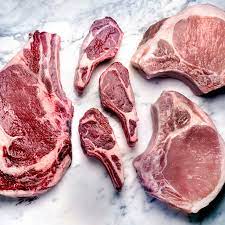
Lamb is the meat of young domestic sheep (Ovis aries).
It’s a type of red meat — a term used for the meat of mammals that is richer in iron than chicken or fish.
The meat of young sheep — in their first year — is known as lamb, whereas mutton is a term used for the meat of adult sheep.
It’s most often eaten unprocessed, but cured (smoked and salted) lamb is also common in some parts of the world.
Being rich in high-quality protein and many vitamins and minerals, lamb can be an excellent component of a healthy diet.
Here’s everything you need to know about lamb.

Nutrition Facts
Lamb is mainly composed of protein but also contains varying amounts of fat.
A 3.5-ounce (100-gram) serving of roasted lamb provides the following nutrients.
- Calories: 258
- Water: 57%
- Protein: 25.6 grams
- Carbs: 0 grams
- Sugar: 0 grams
- Fiber: 0 grams
- Fat: 16.5 grams
Protein
Like other types of meat, lamb is primarily composed of protein.
The protein content of lean, cooked lamb is usually 25–26%.
Lamb meat is a high-quality protein source, providing all nine essential amino acids your body needs for growth and maintenance.
Therefore, eating lamb — or other types of meat — may be especially beneficial for bodybuilders, recovering athletes, and people post-surgery.
Eating meat promotes optimal nutrition whenever muscle tissue needs to be built up or repaired.
Fat
Lamb contains varying amounts of fat depending on how much of it has been trimmed away, as well as the animal’s diet, age, gender, and feed. The fat content is usually around 17–21% ).
It is composed mainly of saturated and monounsaturated fats — in approximately equal amounts — but also has small amounts of polyunsaturated fat.
Thus, a 3.5-ounce (100-gram) serving of roasted lamb provides 6.9 grams of saturated, 7 grams of monounsaturated, and only 1.2 grams of polyunsaturated fat .
Lamb fat, or tallow, usually contains slightly higher levels of saturated fat than beef and pork.
Saturated fat has long been considered a risk factor for heart disease, but many studies have not found any link.
Lamb tallow also contains a family of trans fats known as ruminant trans fats.
Unlike trans fats found in processed food products, ruminant trans fats are believed to be beneficial for health.
The most common ruminant trans fat is conjugated linoleic acid (CLA).
Compared to other ruminant meats — such as beef and veal — lamb contains the highest amounts of CLA .
Vitamins and Minerals
CLA has been linked to various health benefits, including reduced body fat mass, but large amounts in supplements may have adverse effects on metabolic health
Lamb is a rich source of many vitamins and minerals, including:
- Vitamin B12. Important for blood formation and brain function. Animal-derived foods are rich in this vitamin, whereas vegan diets lack it. Deficiency may cause anemia and neurological damage.
- Selenium. Meat is often a rich source of selenium, though this depends on the feed of the source animal. Selenium has various important functions in the body.
- Zinc. Zinc is usually much better absorbed from meat than plants. It’s an essential mineral important for growth and the formation of hormones, such as insulin and testosterone.
- Niacin. Also called vitamin B3, niacin serves a variety of important functions in your body. Inadequate intake has been linked to an increased risk of heart disease.
- Phosphorus. Found in most foods, phosphorus is essential for body growth and maintenance.
- Iron. Lamb is rich in iron, mostly in the form of heme iron, which is highly bioavailable and absorbed more efficiently than non-heme iron found in plants.
In addition to these, lamb contains a number of other vitamins and minerals in lower amounts.
Sodium (salt) may be particularly high in some processed lamb products, such as cured lamb.
Lamb and heart disease
Heart disease is a major cause of premature death.
It’s a group of adverse conditions involving the heart and blood vessels, including heart attacks, strokes, and high blood pressure.
Observational studies have revealed mixed results on the link between red meat and heart disease.
Some studies find an increased risk from eating high amounts of both processed and unprocessed meat, whereas others note an increased risk for processed meat only — or no effect at all. No hard evidence supports this link. Observational studies only reveal an association but cannot prove a direct causal relationship.
Several theories have been proposed to explain the association of high meat intake with heart disease.
For example, a high intake of meat may mean less intake of other beneficial foods, such as heart-healthy fish, fruit, and vegetables.
It is also linked to unhealthy lifestyle factors, such as lack of physical activity, smoking, and overeating.
Most observational studies try to correct for these factors.
The most popular theory is the diet-heart hypothesis. Many people believe that meat causes heart disease because it contains high amounts of cholesterol and saturated fat — impairing the blood lipid profile.
However, most scientists now agree that dietary cholesterol is not a risk factor for heart diseases.
Also, the role of saturated fats in developing heart disease is not entirely clear. Many studies have not been able to link saturated fat with an increased risk of heart disease.
In itself, meat doesn’t have adverse effects on your blood lipid profile. Lean lamb has been shown to have similar effects as fish or white meat, such as chicken.
Still, you should avoid eating high amounts of cured lamb or meat cooked at high heat.
Lamb and cancer
Cancer is a disease characterized by abnormal cell growth. It’s one of the world’s leading causes of death.
A number of observational studies show that people who eat a lot of red meat are at an increased risk of colon cancer over time.
Yet, not all studies support this.
Several substances in red meat may increase cancer risk, including heterocyclic amines.
Heterocyclic amines are a class of cancer-causing substances formed when meat is exposed to very high temperatures, such as during frying, baking, or grilling.
They’re found in relatively high amounts in well done and overcooked meat.
Studies consistently indicate that eating overcooked meat — or other dietary sources of heterocyclic amines — may increase the risk of various cancers, including of the colon, breast, and prostate.
Though there is no clear-cut proof that meat intake causes cancer, it seems sensible to avoid eating high amounts of overcooked meat.
Moderate intake of mildly cooked meat is likely safe and healthy — especially when it’s steamed or boiled.
SUMMARY
- High-quality protein is the main nutritional component of lamb. It also contains varying amounts of fat — mostly saturated fat but also small amounts of CLA, which has several health benefits.
- Lamb is a rich source of many vitamins and minerals, including vitamin B12, iron, and zinc. These are important for various bodily functions.
- Lamb contains several bioactive substances — such as creatine, CLA, and cholesterol — that may benefit health in various ways.
- Lamb may promote the growth and maintenance of muscle mass and improve muscle function, stamina, and exercise performance. As a rich source of highly available iron, lamb may help prevent anemia.
- It’s debated whether eating lamb increases your risk of heart disease. Eating mildly cooked, lean lamb in moderation is probably safe and healthy.
- It’s debated whether eating lamb increases your risk of heart disease. Eating mildly cooked, lean lamb in moderation is probably safe and healthy.
- Eating a lot of red meat has been linked to increased cancer risk. This may be due to contaminants in meat — particularly those that form when meat is overcooked.
 Survey Of World
Leave a comment